
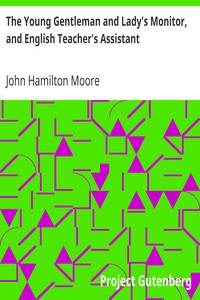
The Young Gentleman and Lady's Monitor, and English Teacher's Assistant by Moore
Let's be clear from the start: this isn't your typical story. 'The Young Gentleman and Lady's Monitor' is an instruction manual, first published in the 1780s. Think of it as the ultimate self-help book for Georgian-era teens. Its author, John Hamilton Moore, aimed to be a one-stop shop for education, combining lessons in English, letter writing, and social conduct.
The Story
There's no plot in the novel sense. Instead, the book is structured as a series of lessons and examples. A huge chunk is dedicated to model letters for every imaginable situation. Need to write to a relative thanking them for a gift? There's a template. Did you offend someone and need to apologize? Moore has you covered. Want to apply for a job or break off a courtship? He provides the script.
Beyond letter-writing, it doles out advice on grammar, pronunciation, and, most importantly, behavior. It instructs young men on dignity and industry and guides young ladies on modesty and domestic skills. The whole thing is framed with moral lessons, often using short stories or parables to drive points home about virtue, piety, and good sense.
Why You Should Read It
Reading this today is a strange experience. On one hand, some advice feels timeless (be kind, be diligent). On the other, the rigid formality is astounding. The book shows how social class and expectations were baked into everyday communication. The pressure to perform perfectly, to always know the 'right' thing to say or write, practically leaps off the page.
I found it most fascinating as a look at adult anxieties about the next generation. Moore wasn't just teaching grammar; he was trying to shape character and secure his readers' social standing. The sample letters are like little playscripts for navigating life. It's also unintentionally funny at times—the sheer volume of rules makes you wonder if anyone ever actually followed them all.
Final Verdict
This book isn't for everyone. If you're looking for a gripping narrative, look elsewhere. But it's perfect for history lovers, language nerds, and anyone curious about social history. It's a primary source that lets you peek directly into the classroom and the parlor of the 18th century. Teachers might find amazing excerpts to discuss changing social norms. Writers of historical fiction could use it as a goldmine for authentic detail. For the casual reader, dipping in and out of its pages offers a unique and thought-provoking glimpse into the past, reminding us that the struggle to figure out 'how to be' is nothing new.
This text is dedicated to the public domain. You are welcome to share this with anyone.
Donald Miller
4 months agoWhile browsing through various academic sources, the attention to detail regarding the core terminology is flawless. A trustworthy resource that I'll keep in my digital library.
Kimberly Wilson
4 months agoAfter finishing this book, the narrative structure is incredibly compelling. I couldn't put it down.
John Ramirez
1 year agoWow.
Kenneth Anderson
2 years agoFinally found time to read this!




Ashley Smith
5 months agoAfter a thorough walkthrough of the table of contents, the argument presented in the middle section is particularly compelling. It definitely lives up to the reputation of the publisher.